
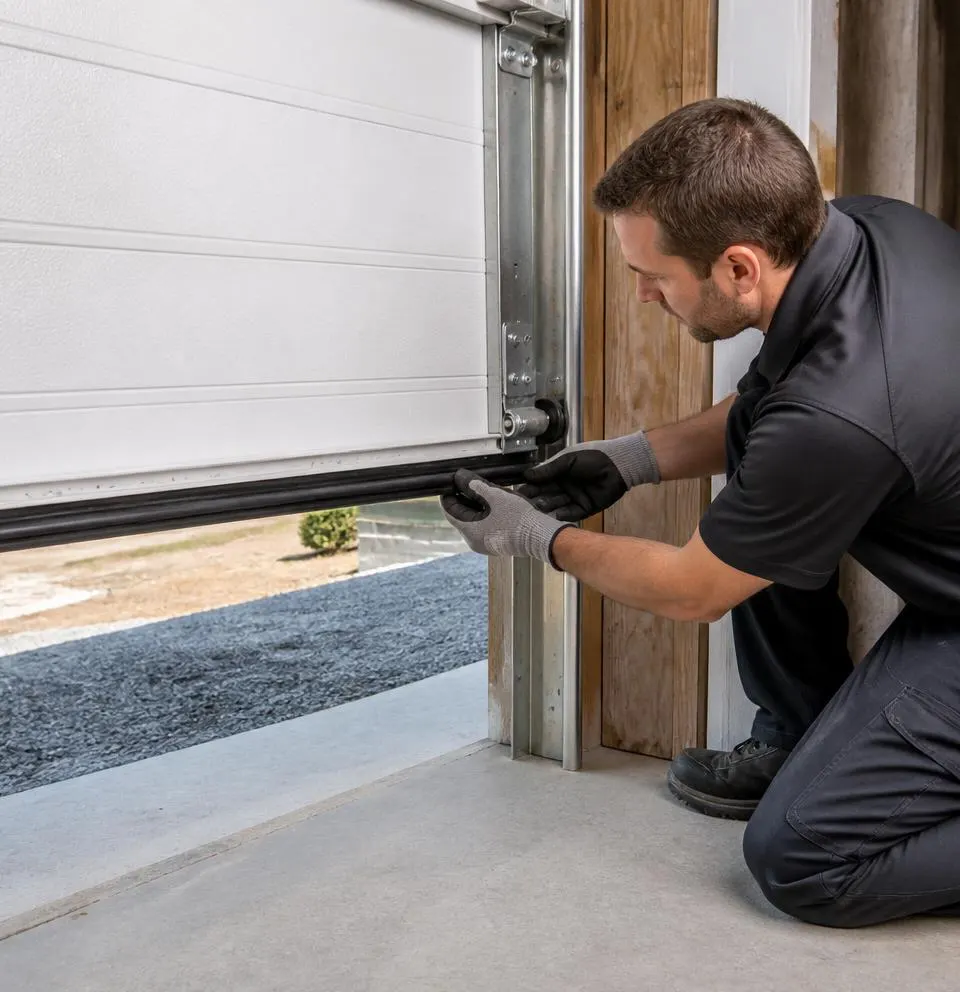
What a Technician Sees This Time of Year
A typical fall service call starts the same way: the homeowner says the door has gotten "louder" or "heavier" since summer. Once the panel is up, the pattern is usually obvious — rust starting on the spring coils, hinges that squeal on the first cold morning, and a layer of pine sap or pollen residue gumming up the track. After months of heat, humidity, and heavy rain, the hardware has quietly been breaking down. Add in the occasional ice storm that rolls through the Lowcountry most winters, and small issues like a stiff roller or a loose bolt can turn into a door that won't open at all on the coldest day of the year.
Humidity and Salt Air Take a Toll Before Winter Even Starts
Garages near Port Royal, Lady's Island, and Seabrook deal with salt-laden air on top of the general coastal humidity, and that combination accelerates rust on unprotected metal. Before temperatures drop, walk the door and look closely at the spring coils, the hinges, and the track brackets. Light surface rust can usually be wiped down and treated, but pitting or flaking rust on a torsion spring is a different story — it weakens the metal right where it's under the most tension, and that's exactly where you don't want a surprise failure.
Check the Springs Before the Cold Changes Things
Metal contracts in cold weather, and torsion and extension springs are no exception. A spring that's already fatigued from a humid summer can lose just enough flexibility in a cold snap to snap outright, often with a loud bang and a door that suddenly won't budge. Signs to watch for include a door that feels unusually heavy when lifted manually, visible gaps in the spring coils, or an opener that strains and makes a grinding noise partway through the cycle. Garage door springs are under heavy tension and are not a safe DIY repair — if you suspect wear, this is one item to have inspected and replaced by a trained technician before, not after, it fails.
Seal Out Wind-Driven Rain and Ice
The bottom weatherstripping and side seals take a beating from heavy summer rain, and by fall they're often cracked, flattened, or pulling away from the frame. That's not just a cold-air problem — gaps at the bottom of the door let wind-driven rain blow in during winter storms and let standing moisture sit against wood framing, which invites rot over time. Replacing worn weatherstripping is inexpensive and quick, and it's one of the highest-value jobs on this list.
Opener and Safety Sensor Check
Cold mornings are when weak garage door openers show their age. Listen for hesitation, a motor that runs longer than usual before the door moves, or remotes that need multiple presses to work. Also check the photo-eye safety sensors near the bottom of the track — pollen film and moisture buildup can coat the lenses enough to cause false reversals, which gets worse once damp winter weather sets in.
Lubricate Hardware and Tighten What's Loose
A few maintenance basics go a long way:
- Lubricate rollers, hinges, and the torsion spring with a silicone-based garage door lubricant, not household oil, which attracts grit.
- Check and tighten the bolts on the track brackets, especially if the garage has been through recent storm winds from hurricane remnants moving inland.
- Clear pine needles, leaves, and sap buildup from the track so rollers move freely.
- Test the auto-reverse safety feature by placing a block in the door's path and confirming it reverses on contact.
When to Call Beaufort Garage Door Pro
If you're hearing grinding from the opener, seeing rust on the spring coils, or dealing with a door that's suddenly heavier or slower to respond, it's time to bring in a trained eye. Beaufort Garage Door Pro handles spring replacement and preventive maintenance visits that catch this kind of wear before it leaves you locked out on a cold or stormy morning. A maintenance visit typically includes a full hardware inspection, lubrication, spring tension check, and sensor alignment — the same things a technician would check on an emergency call, just before something breaks instead of after.
If your garage door has been sluggish, noisy, or showing rust since summer, call Beaufort Garage Door Pro today and get it squared away before winter weather tests it.