
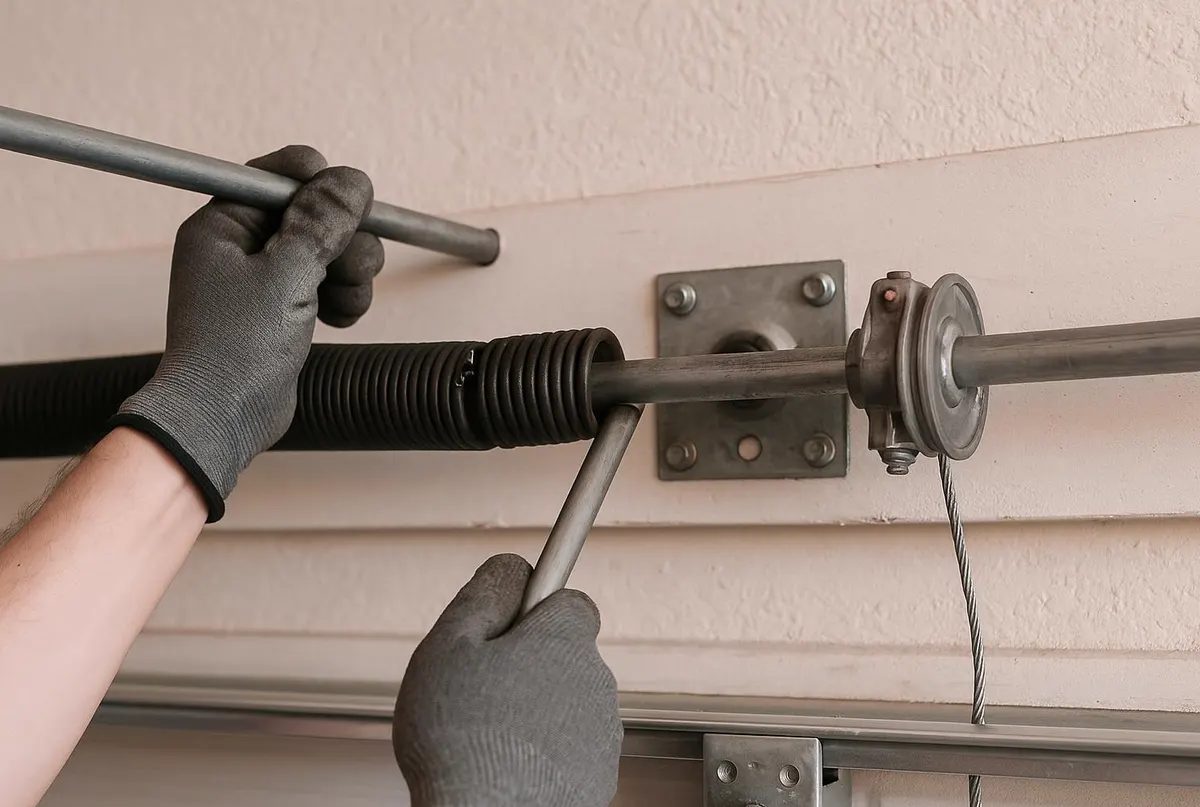
The Fix Most People Try First
When a garage door stops partway down and reverses back up, or won't close at all, the first instinct is almost always to grab a screwdriver and crank up the "close force" dial on the opener. It's tempting because it's fast, it doesn't require touching anything greasy, and often it does seem to work for a day or two. The door finally slams shut.
The problem is that force adjustment is a band-aid, not a diagnosis. Cranking up the force just tells the motor to push harder against whatever is stopping it. If the real issue is a misaligned sensor, a bent track, or a spring that's lost its tension, you haven't fixed anything. You've told a motor to muscle through a mechanical problem, which can strip gears, snap a cable, or worse, let the door slam down on something or someone because the auto-reverse safety feature has effectively been overridden. That feature exists specifically to stop a several-hundred-pound door before it crushes a foot or a car bumper.
What You're Actually Seeing
Before getting into causes, it helps to separate the two symptoms, because they point in slightly different directions:
- Door starts closing, then reverses partway down: almost always a safety system or obstruction issue, since the opener is actively changing its mind mid-cycle.
- Door won't close at all, reverses immediately or won't move past a certain point: can be the same safety system issue, but also points more toward track, spring, or limit-switch problems if it happens every single time at the exact same spot.
Causes, in the Order a Technician Checks Them
1. Safety Sensors (Photo Eyes)
These are the small units mounted a few inches off the ground on either side of the door track, aimed at each other. If their beam is broken, blocked, or even just slightly misaligned, the opener treats it as an obstruction and reverses the door. This is the single most common cause of a reversing door, and it's worth checking first because it's also the easiest to fix.
In this part of the Lowcountry, heavy rain and pollen buildup are frequent culprits. Mud splash, cobwebs, pine debris, and just plain humidity-driven grime on the lenses can be enough to scatter the beam. The fix is simple: wipe both lenses with a soft cloth, make sure nothing (a storage bin, a bike, a stray branch) is sitting in the beam path, and confirm both sensor lights are solid, not blinking. If one unit got bumped or its bracket has loosened, it needs to be physically re-aimed so both lights line up.
2. Obstructions in the Door's Path
Even with clean sensors, something as small as a leaf, an insect, or debris sitting on the track can trip the safety reversal, or physically block the door's travel. After a hard rain, check the bottom track and the floor of the garage for anything that's washed or blown in.
3. Track Alignment
If the vertical tracks on either side of the door aren't perfectly parallel, the rollers bind as the door travels, and the opener reads that resistance as an obstruction. Humidity and the occasional heavy storm can nudge framing or loosen track brackets over time, and rust from damp garages can roughen the roller path enough to cause hesitation. A technician checks for gaps between rollers and track, visible bends, and loose mounting brackets, and will straighten or re-secure the track as needed.
4. Spring Balance
Garage door springs do most of the heavy lifting, literally. If a spring has weakened or is close to failing, the opener has to work harder to move the door, and it may read that extra resistance as resistance from an obstruction rather than from spring wear. A simple balance test, disconnecting the opener and lifting the door by hand, tells a technician a lot here: a properly balanced door stays put at about waist height. If it slams down or shoots up, the spring tension is off, and it needs adjustment or replacement, not a stronger motor push.
5. Limit and Force Settings
Every opener has settings that tell it exactly where "fully closed" is and how much force to use getting there. If these drift out of adjustment, or if they were set incorrectly during a prior repair, the door may stop short of the floor and reverse every time, even with no obstruction at all. This is adjusted through the opener's control panel or learn buttons, and it's done after the mechanical issues above are ruled out, not before.
6. Opener Circuit Board
If everything mechanical checks out and the sensors are clean and aligned, the logic board inside the opener itself may be misreading signals. Power surges from storm activity, which this region sees periodically with hurricane remnants moving through, can damage these boards even when the rest of the electrical system seems fine. A failing board is usually the last thing checked because it's the least common cause, but it's also the one most likely to need a full opener replacement rather than a repair.
When to Call Beaufort Garage Door Pro
If you've wiped the sensor lenses, cleared obvious debris, and the door still won't close reliably, it's time to get a trained eye on it. Beaufort Garage Door Pro's Opener Repair & Installation service covers everything from sensor realignment and limit-switch reprogramming to full circuit board replacement, and our Spring Replacement service handles the balance issues that often get mistaken for opener problems in the first place. We check these systems in the right order so you're not paying to replace a perfectly good motor when the real issue is a $20 part.
If your garage door in Beaufort, Port Royal, Lady's Island, or anywhere else in the Lowcountry is reversing, hesitating, or refusing to close, give us a call. We'll get it diagnosed properly and running the way it should.